
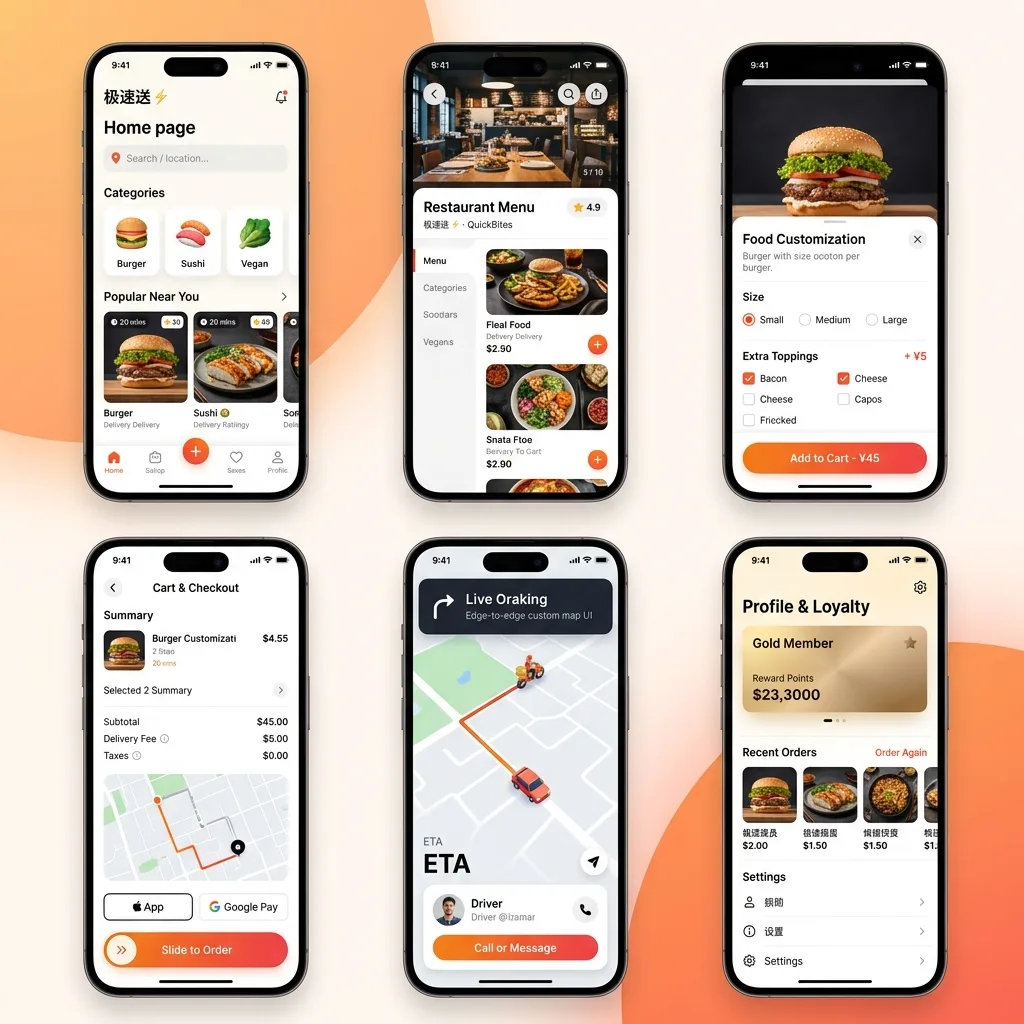
A good Douyin mini program brief should define the first-release user journey, the campaign data your team must manage and the exact launch deliverables. It should also make competing quotes comparable by separating included features from exclusions, assumptions and handover requirements.
For creators, local services, small brands and campaign teams, the most practical first release is often a focused landing flow with lead capture, a coupon or booking action, a campaign admin panel and basic analytics hooks. The Douyin Mini Program Development service path reflects this starter scope, but your estimate should be based on your confirmed requirements rather than a label alone.
Define the campaign goal and first-release user flow
Start with one measurable campaign objective. Examples include collecting qualified enquiries, distributing a limited offer, receiving booking requests or directing users to a local service. Avoid combining several unrelated goals unless each one has a clear place in the flow and a method of measurement.
Describe the journey in plain language:
- A user enters from a Douyin content, profile or campaign touchpoint.
- The user sees the main offer, service or call to action.
- The user submits required information or selects a coupon or booking option.
- The system confirms the action and shows the next step.
- The campaign team reviews the record and follows up where necessary.
For each step, specify the screen, user action, validation rule and success outcome. State whether users must sign in, whether one person can submit more than once and what happens when a coupon is unavailable or a requested booking period cannot be accepted.
A useful brief also identifies the audience, campaign duration, service locations, languages, content owner and expected operating process. These details affect both the interface and the admin workflow.
Specify the landing page, lead form, coupon or booking module
The landing page should be scoped as a list of content blocks rather than a vague request for a promotional page. Specify the headline, offer details, images or video, proof points, service description, call-to-action buttons and any required consent or explanatory text. Confirm which content will be supplied by your team and which content the developer must create or format.
For a lead form, list every field and classify it as required or optional. A useful specification includes:
- Name or contact identifier
- Preferred contact method
- Service, product or location of interest
- Campaign source or tracking value
- Submission confirmation message
- Duplicate submission handling
Do not collect fields simply because they might be useful later. Each field adds friction and creates a data-management responsibility. Ask the supplier how validation, failed submissions, duplicate records and export will work.
If the campaign uses coupons, define the coupon type, eligibility rule, issue limit, validity period, redemption status and staff workflow. Confirm whether the coupon is displayed on screen, delivered through an account area or represented by a code. The estimate should state whether redemption verification is included or whether the mini program only issues a claim.
For bookings, provide the service catalogue, locations, operating hours, appointment duration, blackout periods, capacity rules and confirmation process. Decide whether users request a slot for manual approval or receive an immediately confirmed booking. If scheduling is central to the campaign, compare the proposed scope with the considerations in Booking App Development Cost and Timeline.
Request the campaign admin panel and data-management features
The admin panel is part of the product, not an optional afterthought. A campaign team needs to know what happened after a visitor submitted a form, claimed an offer or requested a booking.
Request a screen-by-screen admin list. It may include:
- Secure administrator login
- Lead, coupon or booking list
- Search, filters and status changes
- Record detail view and internal notes
- Export format and export permissions
- Campaign content editing
- Coupon or booking configuration
- Basic dashboard counts
- User roles, if more than one person operates the campaign
Specify the records the panel stores and who can access them. Ask whether deleted or rejected records remain traceable, how changes are recorded and how exports are protected. If the campaign will continue after launch, request editable fields and content modules instead of requiring a developer for every text change.
You can also compare the mini program scope with a dedicated Admin Panel & Backend Development brief when the campaign requires several roles, complex reporting or integrations with an existing customer system.
Confirm analytics hooks, testing, deployment and handover
“Analytics included” is not specific enough for a fixed estimate. List the events required, such as landing-page view, call-to-action tap, form start, form submission, coupon claim, booking request, confirmation and failure. For each event, define the properties that matter, such as campaign identifier, location, service type or source.
Ask the supplier to show where event names are documented and how your team will verify them. Confirm whether the work includes only event hooks in the mini program or also dashboard configuration, reporting setup and campaign attribution. Do not assume that a tracking script or event call automatically provides a usable report.
The testing and launch section should identify:
- Supported devices and operating conditions
- Screen and interaction checks
- Form, coupon and booking edge cases
- Admin permission and export tests
- Analytics event verification
- Error and empty-state handling
- User acceptance testing process
- Deployment responsibilities and launch checklist
- Post-launch correction period, if any
Current Douyin account, review and publishing requirements can change. Ask the supplier to identify which account access, platform configuration and approvals you must provide, then verify current requirements in the relevant official platform documentation before launch.
Request source code, design files where applicable, environment or configuration notes, deployment instructions, API documentation and administrator guidance. Confirm which third-party accounts, credentials and service subscriptions belong to you. A handover is incomplete if your team receives files but cannot understand how to operate, update or redeploy the project.
Minimum requirement and verification checklist
| Requirement to put in the brief | Verification before approval |
|---|---|
| Landing flow with named screens and actions | Walk through the flow using a screen list or clickable prototype |
| Lead form with fields, validation and duplicate handling | Submit valid, incomplete and repeated records in a test environment |
| Coupon or booking rules | Test an eligible case, an ineligible case and an unavailable case |
| Campaign admin panel | Log in as each role and verify search, status changes and exports |
| Analytics hooks | Trigger every event and match the result to the agreed event list |
| Testing and launch support | Review the test record, open issues and deployment responsibility list |
| Source code and documentation | Confirm repository access, setup notes, configuration ownership and admin guide |
Compare fixed estimates by scope, exclusions and handover requirements
A fixed estimate is useful only when the scope is fixed enough to compare. Ask every supplier to structure the estimate under the same headings: interface design, mini program development, backend, admin panel, analytics, testing, deployment, launch support and handover.
Look for these differences between quotes:
- Number of screens and revisions
- Number and type of forms
- Coupon rules versus simple coupon display
- Booking logic versus enquiry collection
- Admin roles and editable content
- Export, reporting and integration requirements
- Analytics implementation versus analytics reporting
- Testing devices and acceptance rounds
- Deployment assistance and platform configuration
- Source-code, documentation and post-launch terms
Ask for explicit exclusions. Common examples include copywriting, photography, translation, external platform fees, third-party messaging, complex integrations, ongoing campaign operations and new features discovered after approval. Do not treat a low total as a saving if essential operating work has merely been left undefined.
Also ask how changes are handled. The estimate should explain what counts as a scope change, how additions are approved and how the team records decisions. A short written assumption list can prevent disputes over whether a requested dashboard, booking rule or content update was part of the original brief.
The best supplier is not necessarily the one with the shortest feature list or lowest estimate. Choose the proposal that gives your team a testable first release, a usable admin process and a clear path to operate the campaign after launch.
FAQ
Should the first Douyin mini program include both coupons and bookings?
Only if both actions support the same campaign objective and can be managed by the same operational team. If one action is the real conversion goal, make it the primary flow and treat the other as a later phase unless its rules, data and testing requirements are already clear.
What should be included in a Douyin mini program development quote?
The quote should identify screens, user actions, backend records, admin functions, analytics events, testing responsibilities, deployment support, source-code delivery and documentation. It should also list exclusions, assumptions, third-party dependencies and the process for approving changes.
Do I need an admin panel for a small campaign?
If the team must review leads, manage coupons, update content, track bookings or export records, an admin panel is usually part of the operating workflow. A lightweight panel may be enough, but ask for the exact list, roles and data actions rather than accepting “basic admin” as a description.
What information should I send before requesting an estimate?
Send the campaign objective, audience, entry point, screen flow, content list, form fields, coupon or booking rules, operating locations, admin users, analytics events, existing systems and launch responsibilities. Include examples of any existing designs, brand assets or backend data that must be reused.
Prepare your procurement brief
Before contacting a developer, share the proposed mini program name, campaign goal, first-release user flow, number of landing screens, form fields, coupon or booking quantity and rules, admin roles, analytics events, destination market, operating locations and target launch conditions. Also identify existing accounts, APIs, content, designs and data systems that the project must connect to.
Ask for a fixed estimate that separates included scope, exclusions, testing, launch support, source code and documentation. Manboo Studio’s Douyin Mini Program Development path is designed around landing flow, lead capture, coupon or booking, campaign administration, analytics hooks and launch handover. To compare your requirements and request a scoped proposal, discuss requirements.